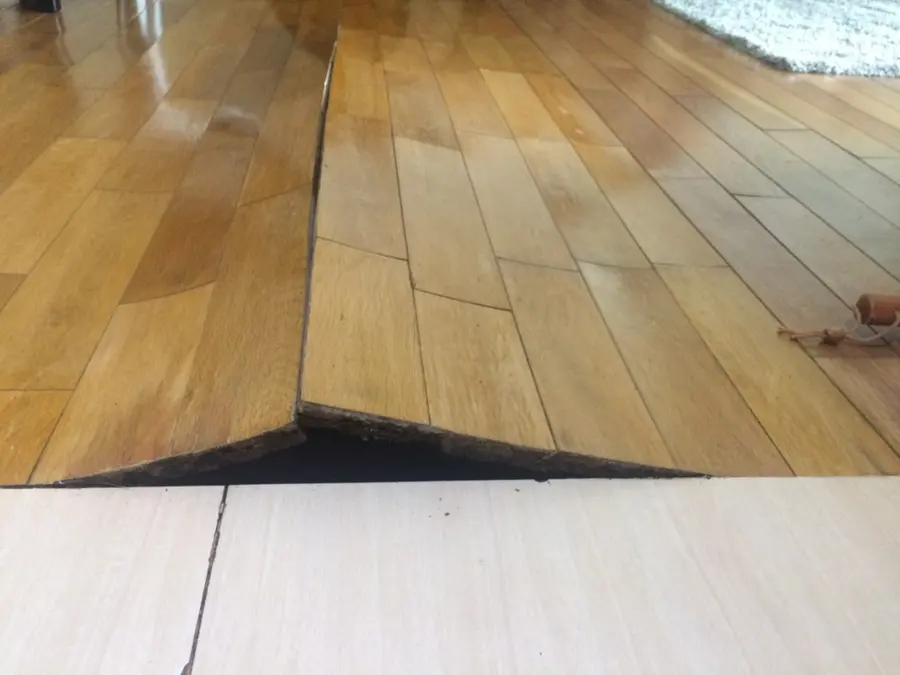
Wood absorbs water through the surface, the edges and the underside, so a floor can look fine while the boards soak from below. Once the moisture climbs, the boards swell, their edges lift and the floor cups. Measured drying is the difference between a floor that flattens back and one that has to be replaced.
What causes it in Covina homes
Covina's wet-weather months run from December through March, and storm runoff can slip under doors onto flooring. Indoors, the common sources are a leaking supply pipe, a dishwasher or refrigerator, and a water heater. The material of any particular floor varies from house to house, so the crew tests the boards and the subfloor rather than assuming how a floor will behave, and it notes the source of the water for the claim file.
How hardwood is dried in place
- Standing water is extracted from the surface and the seams
- Floor drying panels pull moisture up through the boards
- Baseboards come off so air can reach the board ends
- Readings on boards and subfloor are logged each day
When boards have to come out
Boards that have buckled, split or soaked in contaminated water usually cannot be saved. Removing a section early can protect the rest of the floor, because trapped water keeps spreading under finished boards. After removal, the subfloor is dried and checked before new flooring goes in. For a leak that started under the floor, see slab leak water damage, and structural drying explains the equipment that does the work.