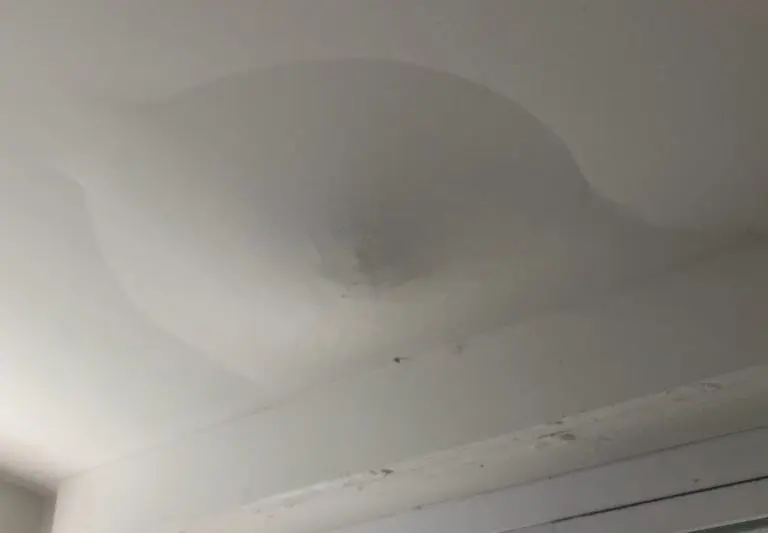
A ceiling stain is the end of a trip. Water may start in an upstairs bathroom, a roof, an air conditioner or a supply pipe in the joists, then spread across a bay of insulation before it shows. Finding the source and the extent matters more than the size of the stain.
When the water comes from another unit
About 2,439 San Dimas homes sit in buildings with other units, and 706 of those are in buildings of 50 or more units. In that setting a ceiling leak can start in a unit above or in a shared pipe, and fixing it means working with a neighbor, a manager or an association. Moisture readings are taken in each affected unit so every party sees the same numbers.
Signs a ceiling is holding water
These signs mean the drywall should be checked:
- A brown or yellow ring that grows after the leak seems to stop.
- Paint that bubbles or peels in a patch on the ceiling.
- A soft or sagging section that gives when pressed.
- Drips from a light fixture or vent in the ceiling.
- A musty smell in a room that looks dry.
Draining, opening and drying the bay
A trained technician drains a bulging ceiling through a small opening so the water does not bring the whole panel down. Wet drywall is cut back to dry edges, insulation in the joist bay is removed, and air movers and a dehumidifier dry the bay and, when needed, the subfloor above. Related causes are described under roof leak water damage and shower leak water damage.