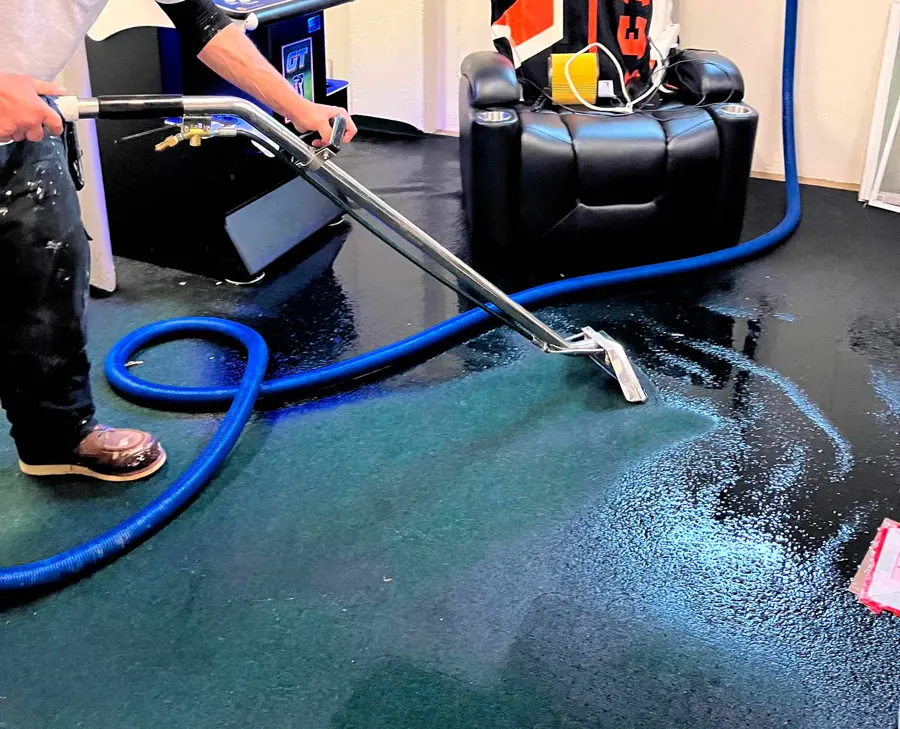
Standing water keeps traveling. It wicks up drywall, soaks into pad and slips under baseboards, which is why extraction comes before any drying equipment is set. In San Dimas the source may be a failed pipe indoors or runoff that crossed a doorway, and either way the first job is to get the volume out.
Which tool gets used where
Different floors call for different equipment, and one job often uses several. Matching the tool to the surface keeps water from being pushed deeper instead of pulled out:
- Truck-mounted units move large volumes out of carpet and open floors.
- Portable extractors reach stairs, closets and upstairs rooms.
- Weighted wands press water out of pad that is still in place.
- Squeegee tools clear tile and sealed floors before air movers go in.
- Wet vacuums finish edges, corners and spots the big tools miss.
How outside water changes the job
Where the water came from sets the plan. San Dimas storm drains carry street runoff to channels, creeks and the San Gabriel River, so runoff that reaches a doorway is treated as contaminated. Carpet and pad it touched are removed and the area is disinfected before drying, because outside water cannot be dried in place the way a clean pipe leak often can. Water from a washer or dishwasher sits between the two, so porous materials are judged case by case. No flood depth or volume is assumed; the meter and the site decide.
What happens once the bulk water is out
Pumping is only the first stage. A meter then checks the floor, the baseboards and the lower wall to find what is still wet, and that map sets the drying plan. Items that cannot be dried, such as saturated pad, are logged with photos so the scope matches what was removed. Structural drying takes over with air movers and dehumidifiers, and the water damage cost calculator helps size the budget before work begins.