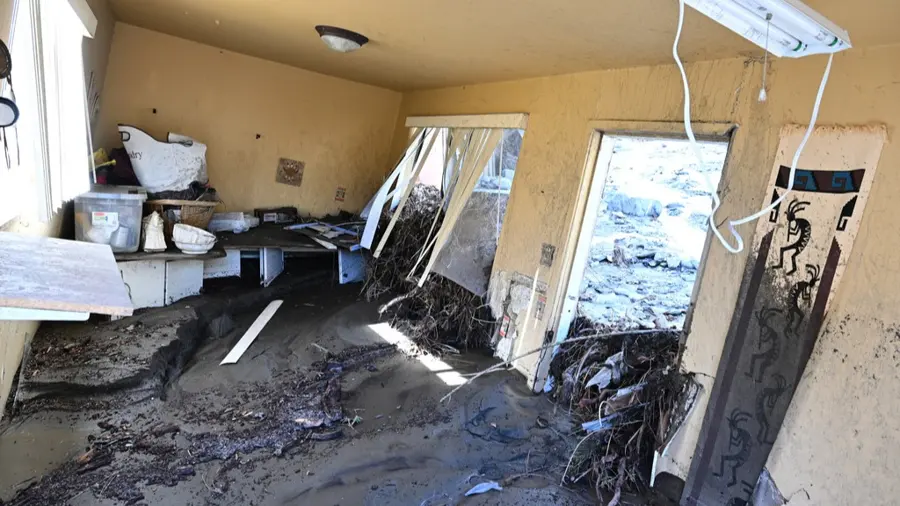
Flood cleanup in Azusa is mostly a foothill story. Storms wash soil and debris down from the San Gabriel Mountains, and the water that reaches a house is dirty. That changes the job from simple drying to removal of contaminated material, careful cleaning, and drying that begins only after the dirt is gone.
What past storms show about Azusa
These dated events show how storms, slopes and burned ground have affected Azusa:
- 1938: an archive photograph shows flood damage to the San Gabriel Railroad Bridge
- 2014: the Colby Fire burned foothill areas in Glendora and Azusa
- February 27, 2014: an Azusa evacuation order for Ridge View Drive residents over mudslide risk
- January 29, 2021: a mudslide closed Highway 39 in the Angeles National Forest
Why mud and silt need their own plan
Silt clogs pumps, coats subfloors and holds bacteria against wood and drywall. In the winter 1969 storms, debris overtopped some basins above Azusa and damaged homes and part of the Azusa Pacific University campus, which shows how heavy a foothill debris flow can be. Mud comes out first, by shovel and bucket, before extraction and washing.
Flood claims and the paperwork
Standard homeowner policies commonly exclude flood and mud flow, and the Los Angeles County floodplain management plan listed only 8 flood insurance policies in force in Azusa as of July 31, 2019. A dated photo set, moisture logs and a written scope of removal give an adjuster what is needed. The wet rooms then move to water extraction and structural drying as soon as mud is out.