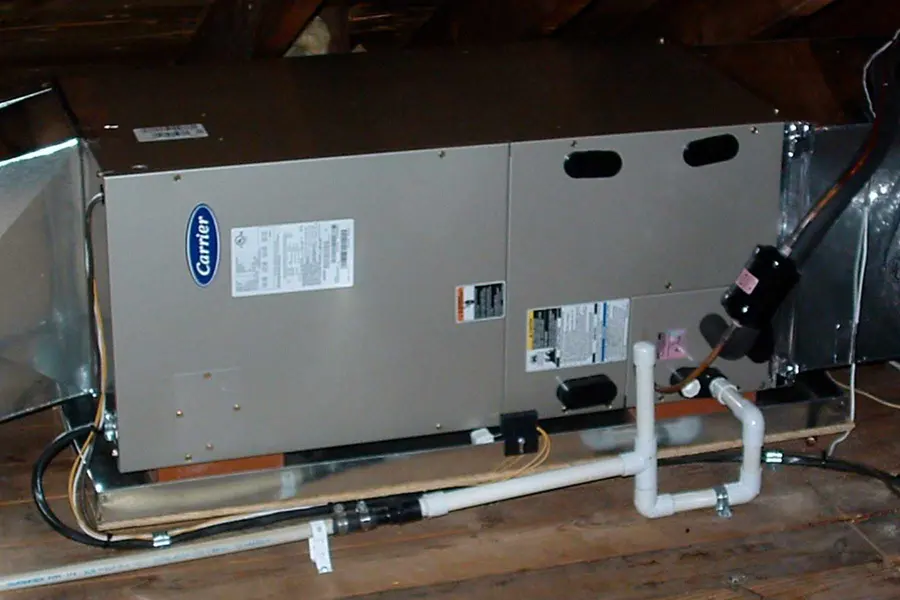
An air conditioner pulls moisture out of the air, and that water has to leave through a condensate drain. When the drain clogs or the safety pan fills, the overflow lands on the attic floor or the ceiling below, and it can run for days before anyone looks up.
How a small drain causes a big stain
Condensate leaks are quiet. Water drips onto insulation, soaks it through and then spreads across the ceiling drywall in a widening stain. A system that runs hard in warm weather produces more condensate, so overflows often appear when the equipment works the most. Because the source is usually the attic, the first sign is a brown ring in a hallway or bedroom, not a puddle. The room-level work is described under ceiling leak water damage.
What gets checked in the attic
A technician checks the attic first, looking at:
- The air handler, its pan and the drain connection.
- Insulation that is compressed, dark or heavy with water.
- Framing and sheathing near the unit for staining.
- Moisture readings in the ceiling below the unit.
Drying the attic and the rooms below
Soaked insulation is bagged and carried out, since left in place it keeps water pressed against the ceiling. Drywall that sags or stains is opened and trimmed back, and air movers with a dehumidifier then work the attic and the rooms beneath at once. The drain and pan are an HVAC job, and a float switch on the pan can shut the system off before an overflow, which is worth asking an HVAC technician about. After the repair, the readings on file prove the framing was dry before the ceiling went back up. Related damage from roofs is described under roof leak water damage.