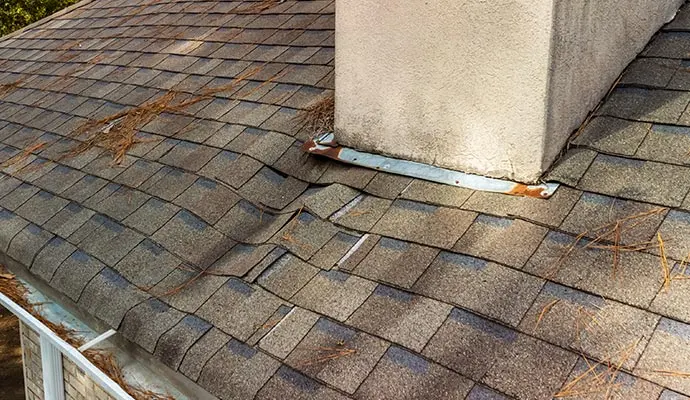
A roof leak is a slow soak. Water enters at a flashing joint or a lifted shingle, runs along a rafter and spreads through insulation before a stain appears on the ceiling below. By the time the paint changes color, the attic has usually been wet for a while.
Winter storms and the first stain
Rain reaches San Dimas in winter storms such as the strong one in February 2025, and a roof that held through the dry months can give way under the first heavy storm. Roof leaks also follow wind that lifts a shingle edge or a clogged gutter that backs water under the eaves. A stain that keeps spreading after the rain stops usually means the insulation above is still holding water.
What the attic tells the crew
Before any ceiling is cut, the attic is checked for:
- Wet or compressed insulation along the rafters.
- Dark staining on the underside of roof sheathing.
- Water tracks running down framing toward the ceiling.
- Moisture readings in the top plates of walls.
- Damp spots near vents, chimneys and flashing.
Drying the ceiling and the rooms below
Stained drywall that sags is drained through a small controlled opening, then cut back to dry material. Wet insulation is removed because it holds water against the framing, and air movers and dehumidifiers dry the attic and the rooms below together. A roofer is the right call for the leak itself; once that repair is made, the drying records show the building was dry before the ceiling was closed. What happens inside the room is described under ceiling leak water damage.