Glendora · CAWater Damage Restoration
La Verne commercial water damage

Commercial Water Damage in La Verne, CA

A wet suite, classroom or shop floor costs more every day it stays closed. The crew extracts the water, contains the affected area, dries in phases and sends daily reports to the owner or property manager.

(888) 578-6508Call about a La Verne commercial loss
Phased drying plans Containment for occupied areas Daily reports for managers
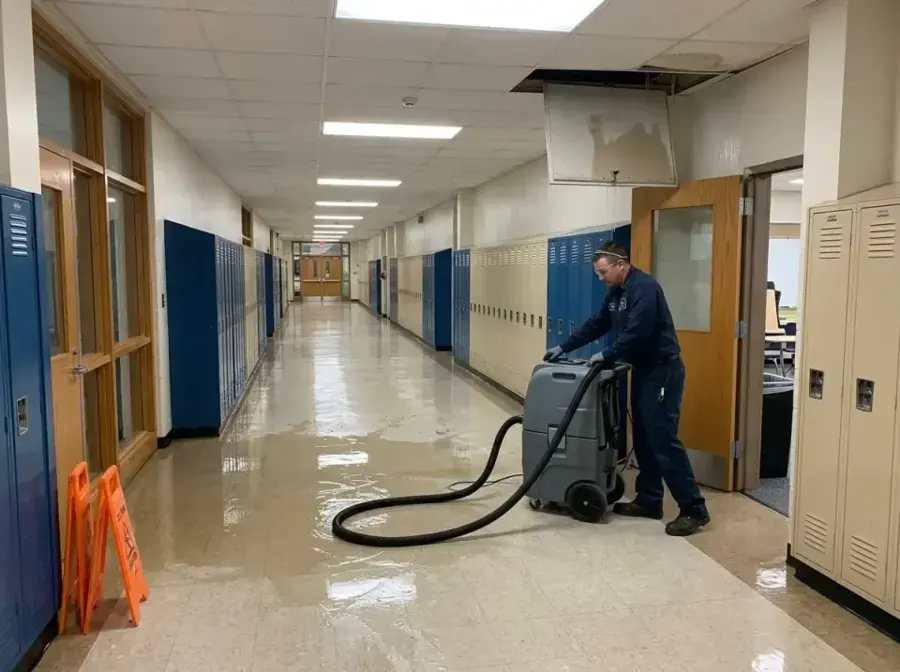
Technician running an extractor down a wet school hallway, shown for La Verne
Typical sitesOffices, shops, schools, large buildings
ApproachContain, extract, dry in phases
ReportingDaily readings and progress notes
GoalReopen areas as they test dry
Right now

First steps for commercial water damage in La Verne

  1. Secure and shut off

    Close the water source, switch off power to wet areas and notify the building manager or owner.

  2. Protect occupied areas

    Redirect foot traffic around wet floors and tape off affected rooms, hallways and entries.

  3. Photograph and list

    Photograph the loss and list affected rooms, equipment, stock and records for the insurer.

  4. Call the crew with details

    Give the size, the use of each room and any hours when work must be quiet or limited.

How this loss behaves
Usual causePipe, roof, sprinkler or fixture failure.
PriorityReopen the worst areas first.
ReportingDaily readings for the manager.
Code noteBackflow devices need city approval.
Typical cost ranges

What does commercial water damage cost in La Verne, CA?

A single suite or classroom usually costs $3,000 to $10,000 to dry. Several suites or a whole floor run $10,000 to $30,000, and a large building loss reaches $30,000 to $75,000 or more.

One suite or classroom

$3,000 to $10,000
  • Extraction and tear-out
  • Containment around the area
  • Daily reports

Multiple suites or a full floor

$10,000 to $30,000
  • Drying planned in phases
  • LGR and desiccant dehumidifiers
  • Scheduling with the manager

Building-wide loss

$30,000 to $75,000+
  • Entire floors or buildings
  • Temporary power if needed
  • Complete claim records

Ranges are typical, not a quote. The water category, the square footage that got wet, the material class and how soon drying started move the number most. The water damage cost calculator gives a closer planning range.

The process

How commercial water damage is handled in La Verne

Moisture gets mapped before any equipment goes down, and the equipment stays until the readings say dry, not until the room looks dry.

  1. Assess and contain

    The crew walks the site with the manager, contains the wet zones and protects occupied space.

  2. Extract and demolish

    Water is extracted and wet drywall, ceiling tile and flooring are removed in the marked zones.

  3. Dry in phases

    Equipment is staged by zone and moved as readings fall, so areas reopen one at a time.

  4. Report and release

    Daily readings go to the manager, and each area is released once it matches the dry reference.

Rapid local response

Restoration crews dispatch 24/7 across La Verne, because water keeps moving into subfloor, cabinets and drywall after dark.

IICRC S500 drying standard

The drying team works to IICRC S500: structural drying, not just surface drying, with readings logged daily.

Claim-ready documentation

A moisture map, psychrometric logs and timestamped photos build the file an adjuster reviews.

Foothill water know-how

Slab leaks, aging supply pipe, attic AC overflows and winter storm runoff are everyday work across the San Gabriel Valley foothills.

A commercial loss is a scheduling problem as much as a drying problem. Tenants, students and customers need floors and rooms back, so the plan dries the worst areas first and releases space in phases as the readings allow.

La Verne's commercial and institutional base

The University of La Verne, Bonita Unified School District campuses, shopping centers along Foothill Boulevard, Old Town La Verne shops on D Street, San Polo Business Park, Brackett Field and Brethren Hillcrest all make up the local building stock. Each has different hours, floors and occupants, so the crew learns the building before setting equipment.

San Polo Business Park is a 100-acre master-planned park at the northern edge of Brackett Field, with industrial buildings. Large open floors like those dry with zoned equipment and, where needed, temporary power.

Backflow rules in a wet building

City code prohibits cross-connections unless the city approves them, and approval requires city-approved backflow prevention devices installed by the consumer. A building with one should point it out to the crew before extraction and demolition begin.

How the work is phased

  • Containment around the affected suite or classroom
  • Extraction and tear-out of wet materials
  • Drying in zones with staged equipment
  • Daily readings sent to the manager

For the drying methods themselves, see structural drying, and for a flood that reaches a ground floor, see storm runoff and flood cleanup.

Related

Related water damage services in La Verne

Planning tools for the next step

Coverage

Commercial water damage across La Verne

Commercial calls cover ZIP 91750, from Old Town La Verne shops on D Street and Third Street to the Foothill Boulevard centers, San Polo Business Park, the University of La Verne and the campuses of Bonita Unified School District.

The same service nearby: commercial water damage in Glendora, San Dimas, Covina.

La Verne, CA service area

Water damage restoration in La Verne · every city covered

Questions

Commercial Water Damage questions in La Verne, CA

How is a commercial loss different from a home?

Occupancy, hours and the number of rooms change the plan. Containment keeps open areas usable while wet zones are dried in phases.

Can a school or office stay open?

Often parts of it can. The crew contains wet areas, dries them in zones and releases space as readings reach the dry goal.

What are backflow devices and why mention them?

City code prohibits cross-connections unless the city approves them, and approval requires city-approved backflow prevention devices installed by the consumer. Buildings with one should point it out before work begins.

Who gets the daily reports?

The owner or property manager, and the insurer when a claim is open. Reports list readings, equipment and the next step.

Does the crew handle industrial buildings?

Yes. Large open floors, including the industrial buildings of San Polo Business Park, are dried with zoned equipment and temporary power where needed.

How does the work tie into structural drying?

Commercial drying uses the same methods as structural drying, applied on a larger scale with phasing and more reporting.

24/7 water emergencies

Dry it in phases

The crew contains the wet zone, extracts the water and reports readings daily.

(888) 578-6508Plan the La Verne dry-out
Call (888) 578-6508 24/7