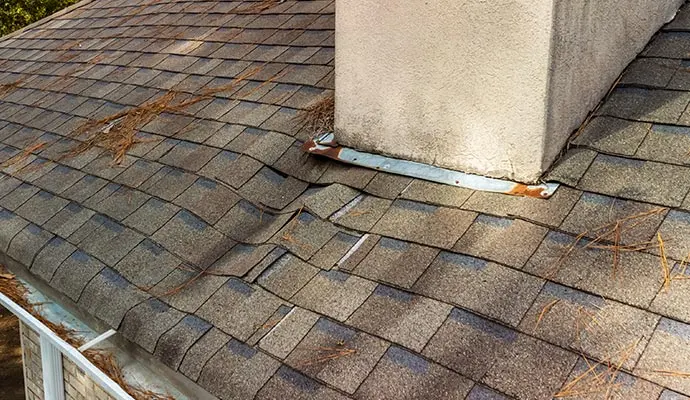
A roof leak announces itself as a ceiling stain, but the wet area is almost always larger. Insulation above the stain soaks up water like a sponge and holds it against the drywall for as long as the attic stays damp.
What gets wet above the ceiling
Water follows rafters and framing before it drips, so the drip point and the leak point can be far apart. Insulation absorbs the water, the ceiling drywall sags, and moisture can travel into wall tops and fixtures.
- Saturated insulation in the attic
- Ceiling drywall that bulges or stains
- Wall tops and light fixtures below the leak
- Carpet or flooring where drips landed
The crew drains a bulging ceiling at a controlled spot, removes wet insulation and opens drywall that stays wet. Power to the room stays off until each fixture has been checked.
Storm seasons in La Verne
Roof leaks tend to surface during winter storms. In February 2024, La Verne received 9.5 inches of rain, according to the National Weather Service, and First Street was among the numerous streets with substantial flooding. Heavy rain can push water under flashing, edges and seams that shed a lighter shower without trouble.
Each leak is traced from the stain back to the wet area before anything is cut, because the entry point is rarely directly above the stain.
Who fixes what
A roofer repairs the roof, and temporary protection over the opening keeps new rain out while repairs are scheduled. The restoration crew handles the water that already got inside, and the drying records show how far the leak traveled, which is what the insurer asks about first. A stain with no roof involved is covered under ceiling leak water damage, and wet attic framing is dried as described under structural drying.