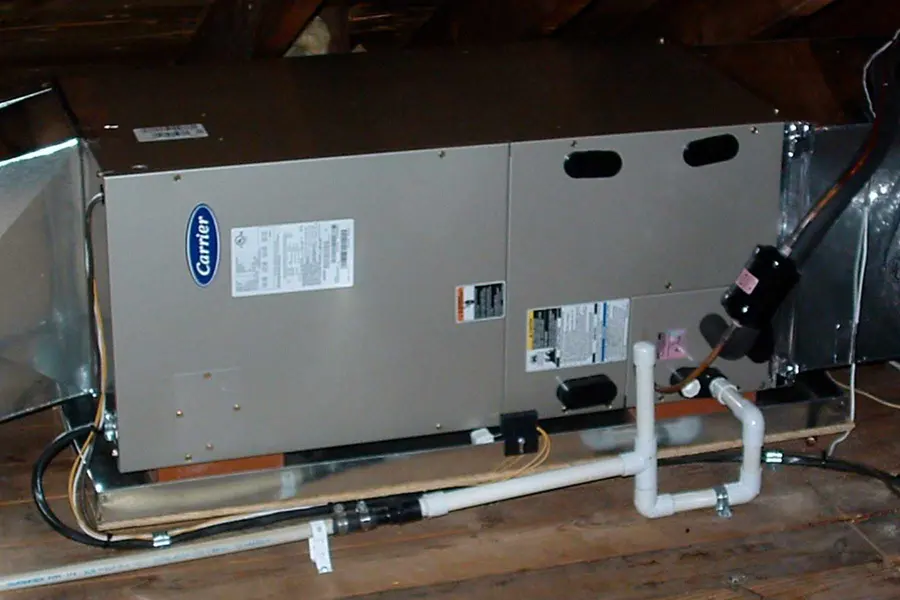
Cooling equipment pulls water out of the air and sends it down a small drain. When that drain clogs or the pan beneath the unit overflows, the water goes into insulation and ceiling drywall, usually unseen until a stain appears.
How a small drain causes a big stain
A condensate drain carries a steady trickle that is easy to forget. Algae and debris can clog it, and a pan that fills has nowhere to send the overflow except into the structure.
The water starts clean, but standing in insulation it gathers dust and turns gray. Early removal keeps the job small and the ceiling repair limited to the stained section.
An air handler in a closet or hallway can do the same thing at floor level, soaking carpet and baseboards instead of a ceiling. The path differs, and the method stays the same: stop the water, remove what soaked it up and dry with readings.
What gets opened and dried
The crew follows the water from the stain back toward the air handler:
- Saturated attic insulation removed
- Stained ceiling drywall cut out
- The platform or framing under the unit dried
- Rooms below checked with a meter
Stopping a repeat
An HVAC technician clears the drain and checks the pan and its float switch, and the crew then dries the structure. Keeping the drain clear between service visits is the cheapest way to prevent the next leak. If water reached the floor below, water extraction covers the pump-out, and a ceiling that already sagged is covered under ceiling leak water damage.